
We tell ourselves a comforting story about lead.
We tell ourselves it’s a problem solved—a ghost of a dirtier, more industrial past. We celebrate the great public health victories of the 20th century: the banning of lead from gasoline in the 1970s, the prohibition of lead-based paint in 1978. We successfully removed the primary sources of acute, high-level poisoning. We won the war.

But this, it turns in, is a dangerous illusion.
While we were celebrating our victory, the enemy simply changed tactics. It moved from a frontal assault to a quiet, insidious guerrilla campaign. The threat is no longer the high-level exposure that causes obvious, immediate cognitive deficits. The new threat is a chronic, low-level exposure that is acting as a silent trigger, a “second hit” that is exacerbating some of the most complex and heartbreaking neurological disorders of our time.
New, groundbreaking research is sounding a profound alarm. Scientists, like Dr. Tomás R. Guilarte of Florida International University, are now drawing a direct, molecular line between these “safe” low levels of lead and the aggravation of neurodevelopmental diseases like Autism Spectrum Disorder (ASD), schizophrenia, and even neurodegenerative conditions like Alzheimer’s.
This research presents a paradigm-shifting hypothesis: lead doesn’t cause these diseases. It waits. It lurks in our bones and blood, and in individuals who are already genetically vulnerable, it acts as the environmental trigger that pushes a predisposed brain over the edge.
It is a “synaptopathy”—a disease of the synapse—and it’s happening right under our noses, enabled by public health standards that are, according to this new evidence, catastrophically outdated. We didn’t solve the lead problem. We just stopped looking.
Part 1: The Myth of “Safe”—Where the Ghost Still Hides
Our modern public health system is built on a simple, flawed premise: “the dose makes the poison.” We establish an “action level” or a “safe” threshold for toxins. For lead, the U.S. Centers for Disease Control and Prevention (CDC) currently sets its blood-lead “reference value” at 3.5 micrograms per deciliter (μg/dL). The EPA’s “action level” for water is 15 parts per billion (ppb).
These numbers are not based on “safety.” They are based on statistical averages and the level at which intervention becomes “medically necessary” to prevent acute damage. But the new science of neurodevelopment suggests this is a profound miscalculation.
The core argument is that for the brain, there is no safe level of lead.
While we may have banned new uses, lead is a persistent element. It does not decay. It does not go away. It is everywhere.
We are all, in essence, part of a low-level, chronic exposure experiment. And for the most vulnerable among us, that low dose is anything but harmless.
Part 2: The “Two-Hit” Hypothesis: When Genes and Environment Collide
This is the central thesis that changes everything. For decades, we have debated “nature vs. nurture.” Is schizophrenia genetic? Is autism environmental?
The “two-hit” hypothesis argues this is the wrong question. It is almost always nature and nurture.
The result is a fire. The genetic predisposition is activated by the environmental toxin, and the disease manifests. The lead exposure acts as an aggravating factor, a “second hit” that derails an already vulnerable neurodevelopmental process.
This model explains why one child in a family develops ASD while their sibling does not, even with similar genetics. It explains why one person with a genetic marker for Alzheimer’s experiences rapid decline, while another does not. The missing variable, in many cases, is the second hit: the environment.
Part 3: The Molecular Trojan Horse: How Lead Hijacks the Brain
To understand why lead is such a uniquely devastating “second hit,” we have to go down to the molecular level. This is where the work of scientists like Guilarte becomes so critical.
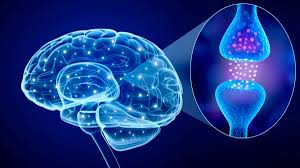
The brain is an electrical circuit. Its magic happens not in the “wires” (the neurons) but in the gaps between them. This gap is the synapse. It’s where one neuron releases chemical messengers (neurotransmitters) to “talk” to the next.
This entire conversation is controlled by a “master regulator”: Calcium (Ca2+).
Calcium is the “spark” of thought, memory, and learning. When you learn something new, calcium ions flood into the neuron through specific “gates” or “channels.” This flood of calcium is the signal that tells the synapse to “strengthen” its connection. This process, known as synaptic plasticity, is the physical basis of all learning and memory.
Here is the problem: to a neuron’s “calcium channel,” the lead ion (Pb2+) looks almost identical to a calcium ion (Ca2+).
Lead is a molecular Trojan Horse.
The result is a “synaptopathy”—a disease of the synapse.
The “signal” of the brain’s conversation is disrupted. The process of strengthening and pruning connections, which is absolutely critical for a developing child’s brain, is derailed. The process of maintaining and recalling memories, which is essential for an aging brain, begins to fail.
Lead doesn’t just “poison” the brain in a vague sense. It attacks the very mechanism of learning, memory, and cognitive development at its most fundamental, molecular level.
Part 4: A Spectrum of Disruption, A Lifetime of Risk
This single mechanism—the hijacking of the synapse via the NMDA receptor—explains why lead is linked to such a wide spectrum of disorders. The timing of the “second hit” determines the outcome.
In Utero & Early Childhood (ASD & Schizophrenia): A child’s brain is not a small adult brain; it’s a construction site. From gestation through early adulthood, the brain is in a frantic process of “wiring” itself. It overproduces synapses and then “prunes” away the ones it doesn’t need. This is how the brain’s complex architecture is built.
If lead exposure (Hit 2) happens during this critical period in a child who is already genetically vulnerable (Hit 1):
In Adulthood & Old Age (Alzheimer’s Disease): In an adult brain, the challenge is maintenance and plasticity. Alzheimer’s is, at its core, a disease of failing synapses, long before the plaques and tangles become widespread.
If an individual is already genetically predisposed to Alzheimer’s (e.g., carrying the APOE4 gene variant), chronic, low-level lead exposure acts as a powerful accelerator. Lead, which accumulates in our bones, can be re-released into the bloodstream during periods of stress, a broken bone, or osteoporosis in later life.
This “internal” lead exposure provides a new “second hit” decades after the initial exposure. It once again attacks the NMDA receptors, accelerating the synaptic loss and cognitive decline that is the tragic hallmark of the disease.
Conclusion: We Must Redefine “Poison”
This new science forces us to confront a terrifying reality. We have built our public health policies on a definition of “poison” that is fatally flawed.
We defined “poison” as a high-dose substance that causes immediate, observable harm. The new definition, the one that matters for the 21st century, is a “low-dose disruptor.” It is a toxin that does not kill the cell, but silently, chronically, and progressively disrupts its function.
Our “safe” levels of 3.5 μg/dL are not safe. They are simply the level we have chosen to tolerate. This new research argues that the damage—the synaptic disruption—can begin at levels far, far below this threshold.
The only “safe” level of lead is zero.
This is not just a scientific debate. It is a moral and economic one. We are spending hundreds of billions of dollars globally to manage, treat, and support individuals with ASD, schizophrenia, and Alzheimer’s. We are searching desperately for cures. And yet, we are simultaneously ignoring a preventable, man-made environmental trigger that is demonstrably aggravating these very conditions.
We must find the political and economic will to finish the war we thought we won. We must demand the full replacement of every lead service line. We must fund comprehensive abatement programs for old homes. We must hold polluters accountable and tighten regulations on all consumer products.
The ghost is not in the past. It is in our water, in our soil, and, as a result, in the very wiring of our brains. We can no longer afford to ignore it.